Dryer Fabric
Four families on one page: anti-static dryer belts for wool scouring and wood panel forming, spiral fabrics for open high-airflow drying, square mesh drying & conveyor belts, and flat-yarn dryer fabrics for paper and nonwoven lines — all factory-tested and seamed to your machine.
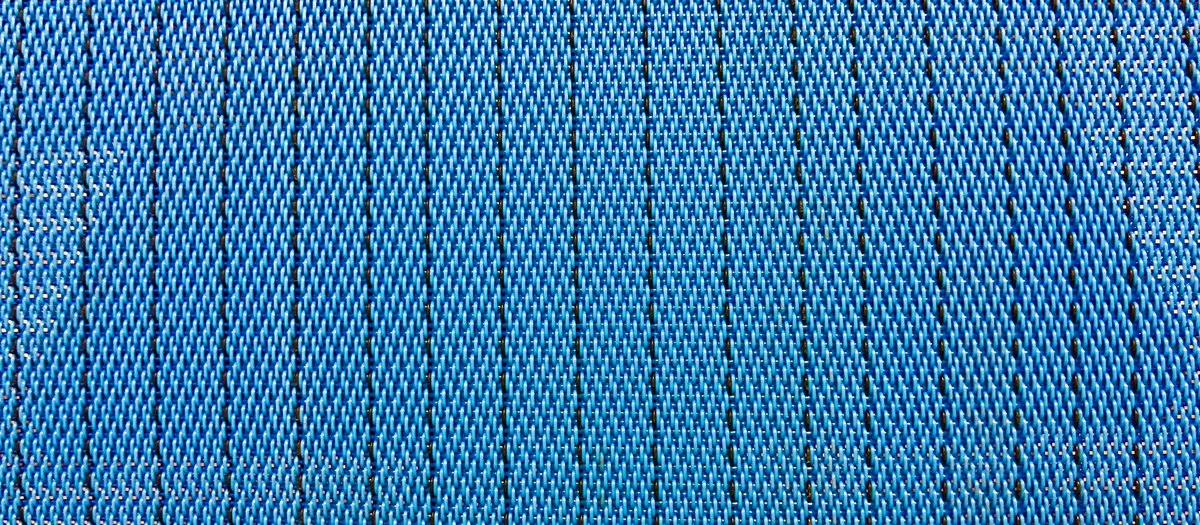
Dryer fabrics carry the product through heated drying zones — everything about them is a trade between air flow, static control and seam life. The Aurora DF range covers four families: anti-static dryer belts, our flagship line for wool scouring and wood panel forming where we hold a genuine quality advantage; spiral fabrics, the open high-airflow option in PET, PPS and non-stick PTFE grades; square mesh (screen mesh) belts for food, wood chip and biomass drying, conveying and screening; and the classic flat-yarn dryer fabrics for paper machine drying sections and nonwoven spunlaid lines — every construction factory-tested and seamed to your machine.
Family 1 · Anti-static dryer belts — the flagship line
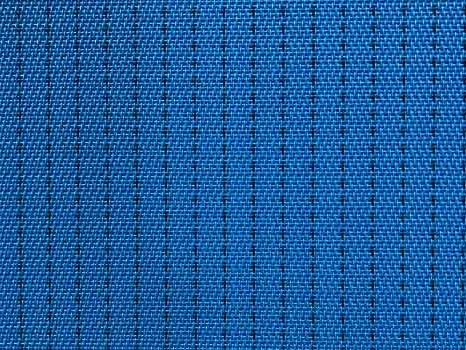
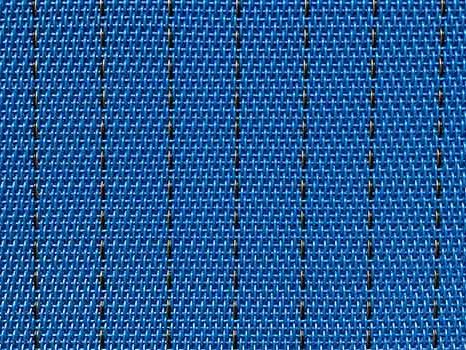
Static is the dryer's hidden tax: it pulls dust and lint into the fabric, wraps product around rolls and stings crews on every contact. Our flagship anti-static belts drain the charge through the yarn itself — and they serve two main duties: wool scouring dryers and wood panel forming & pre-press lines. Three constructions:
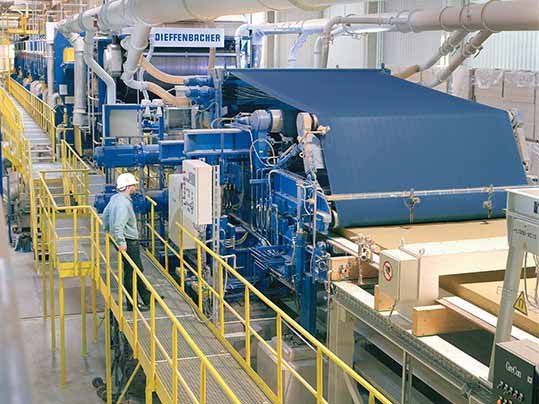
Wood-based panel forming & pre-press
Main duty 1
On MDF, OSB and particleboard forming lines, resin dust and high-speed friction charge the belt until fibers cling and mark the board. Anti-static monofilament keeps the belt clean through the forming and pre-press sections, and the spiral-linked enhanced seam survives the pre-press nip.
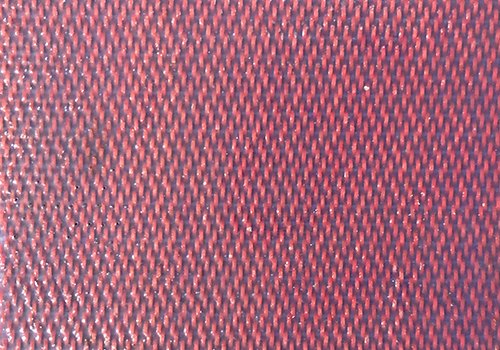
4106S — silicone-coated belt for panel lines
Wood panel only
Where resin-laden product must release cleanly, 4106S coats a single-layer dryer fabric with a layer of high-temperature silicone — a version supplied specifically for MDF and board production, running as a pre-press and transport belt where sticking costs downtime.
See them run — filmed at customers' plants
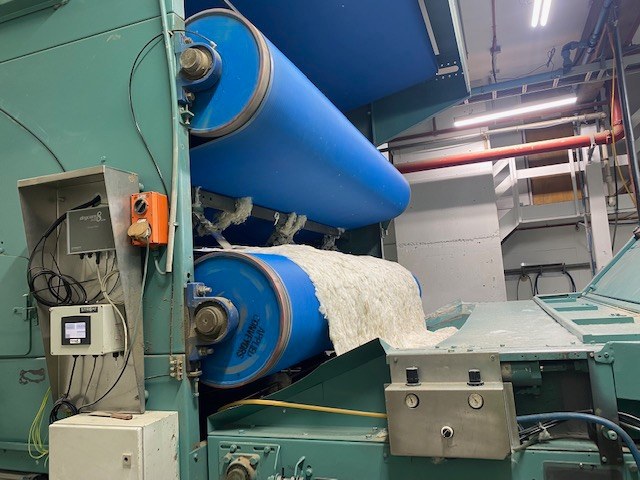
Wool drying after scouring
Main duty 2 · customer case
Wet wool after scouring dries in a charged, lint-heavy atmosphere — the textbook duty for anti-static monofilament, and the application where our fabric quality carries a direct quality and margin advantage. These photos come from a running customer line.
Family 2 · Spiral fabrics — open, high-airflow belts
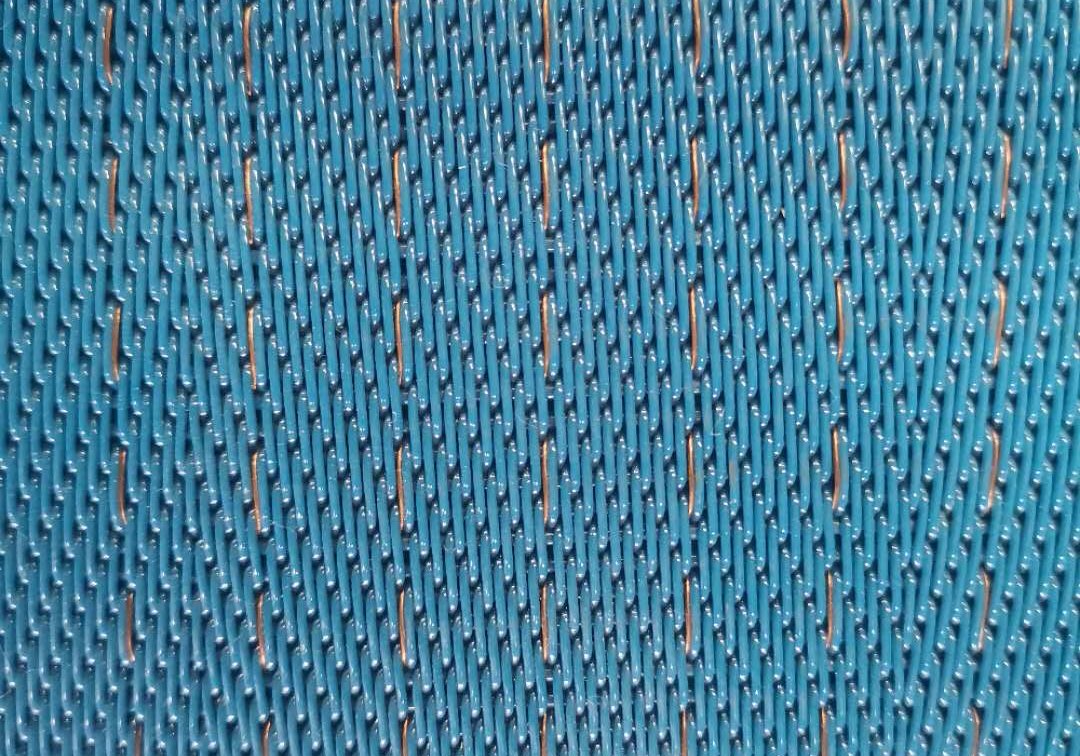
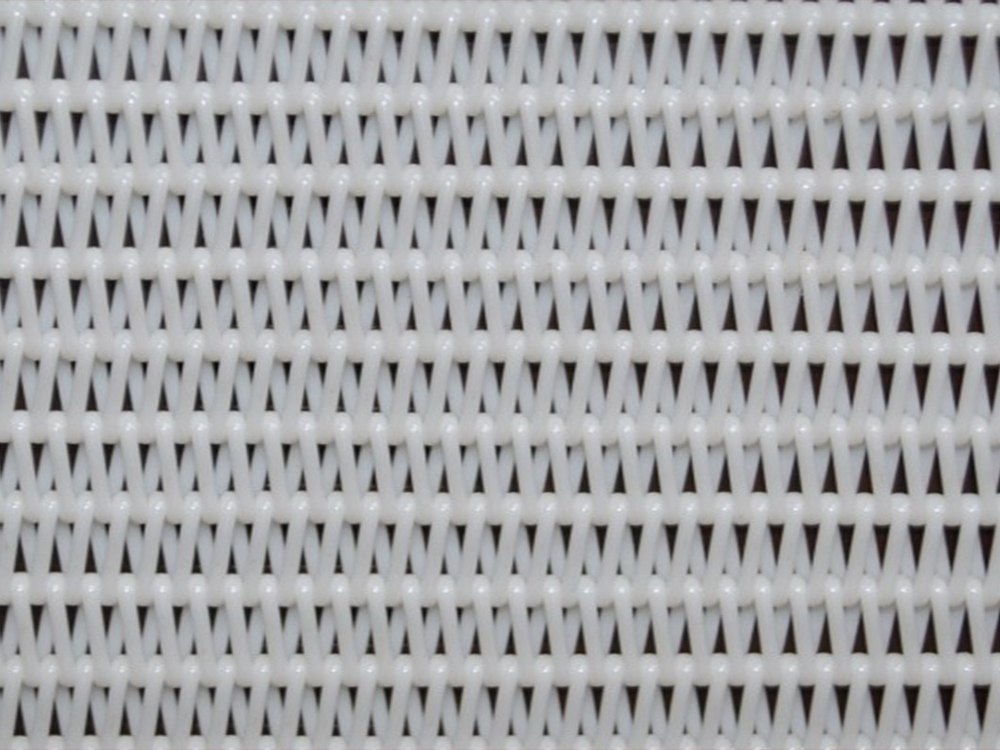
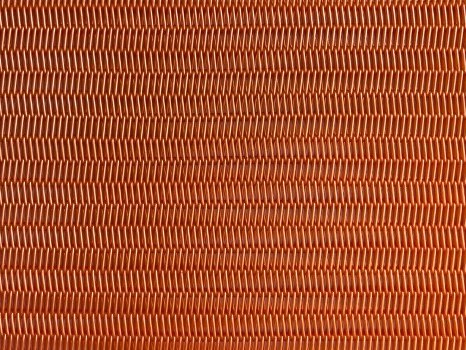
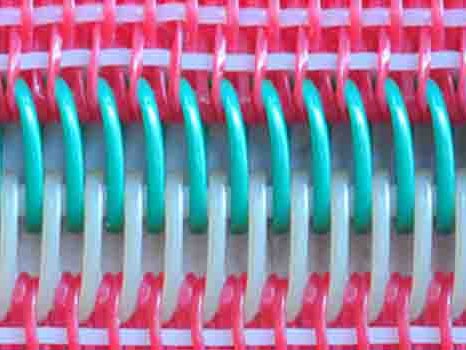
Where a woven fabric runs too closed, spiral fabrics take over: monofilament spirals joined by hinge pins into an open, non-tracking belt that moves air, drains freely and cleans easily. Standard PET covers most drying and conveying duties; PPS serves high-temperature dryers; PET with added PTFE brings non-stick release — the orange masterbatch marks it, and colors are customizable. Filler yarns tune the permeability down when fines must be held.
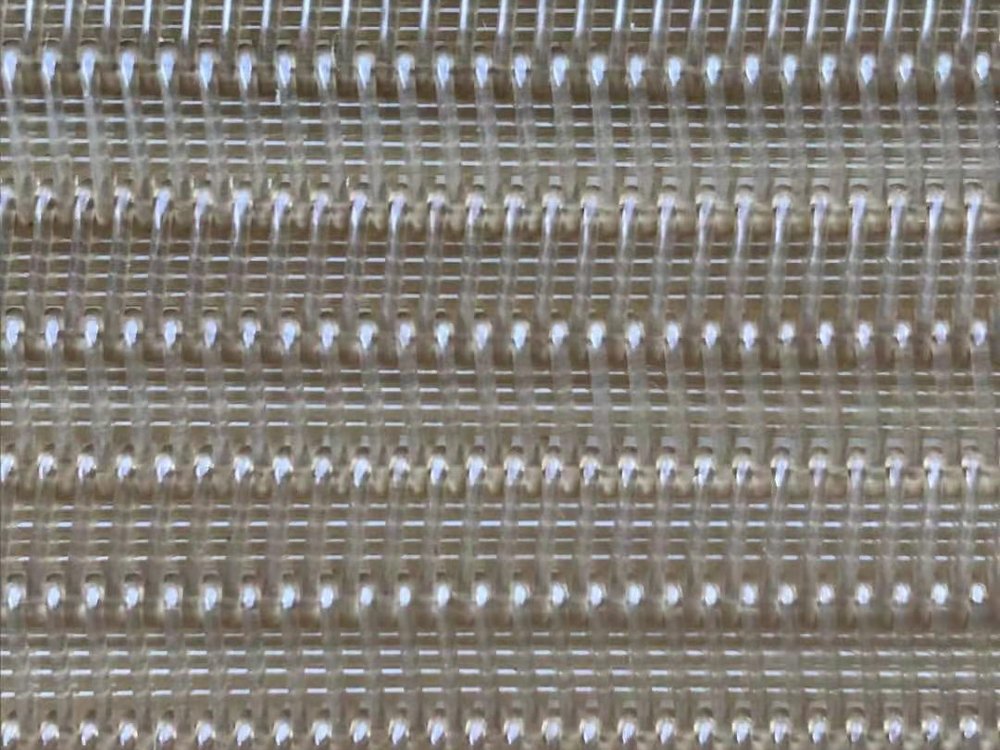
PPS spiral belts — the high-temperature option
To ~240 °C duty
The 9010 in all-PPS — spiral yarns and filler yarns both PPS — is built for dryers running hot, where PET would age. It keeps the spiral family's easy cleaning and on-machine repairability at temperatures woven anti-static fabrics cannot reach.
Family 3 · Square mesh belts — drying, conveying & screening
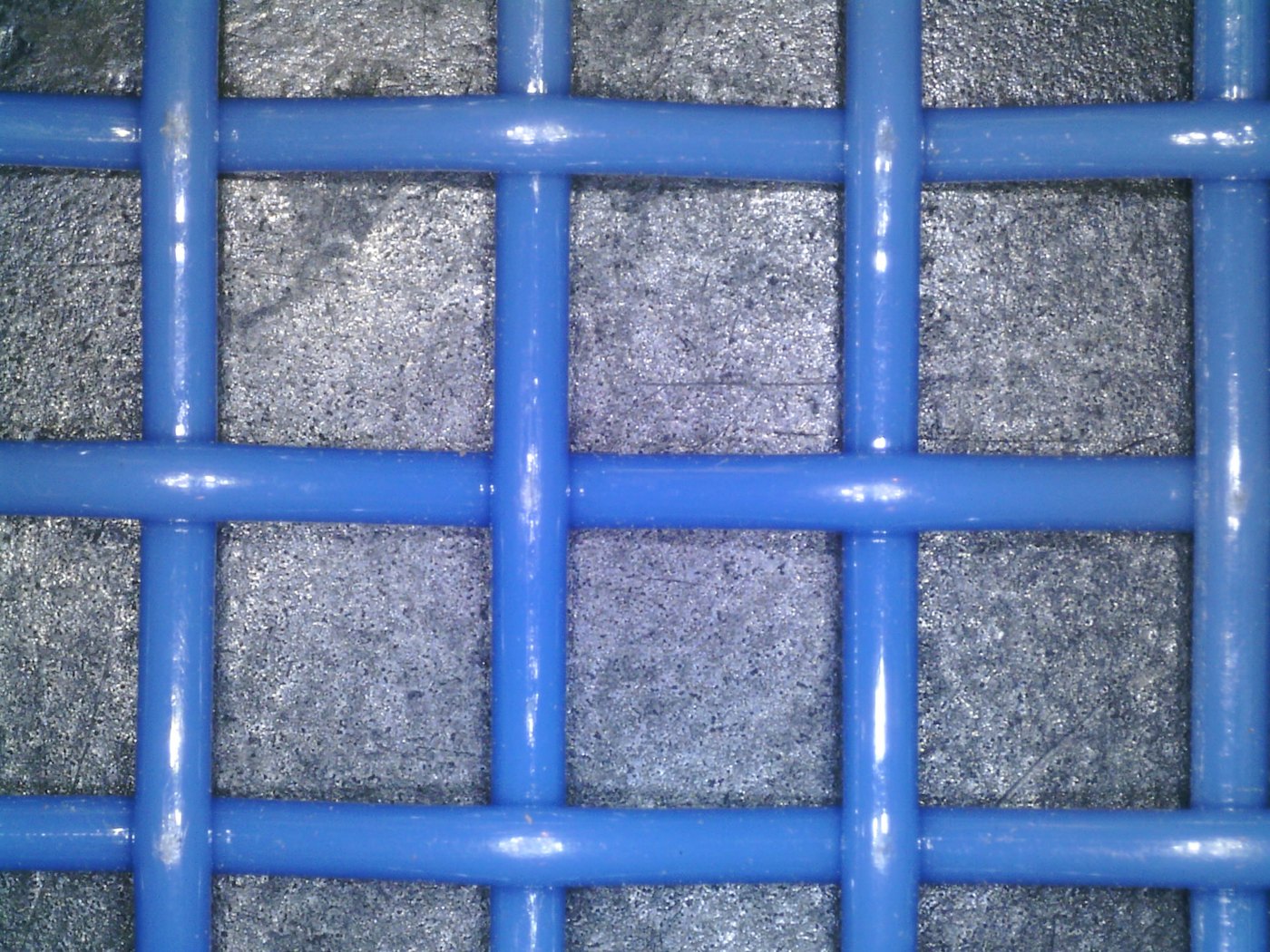
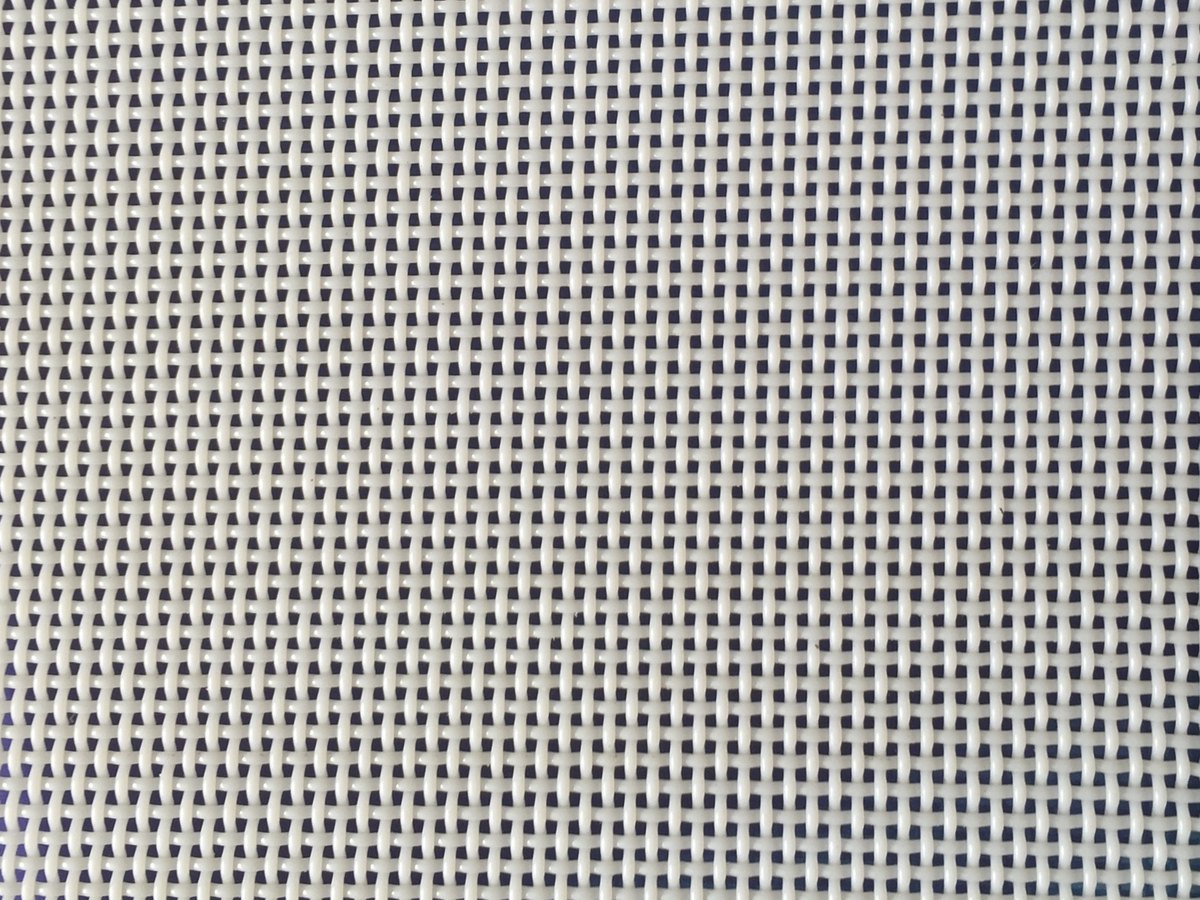
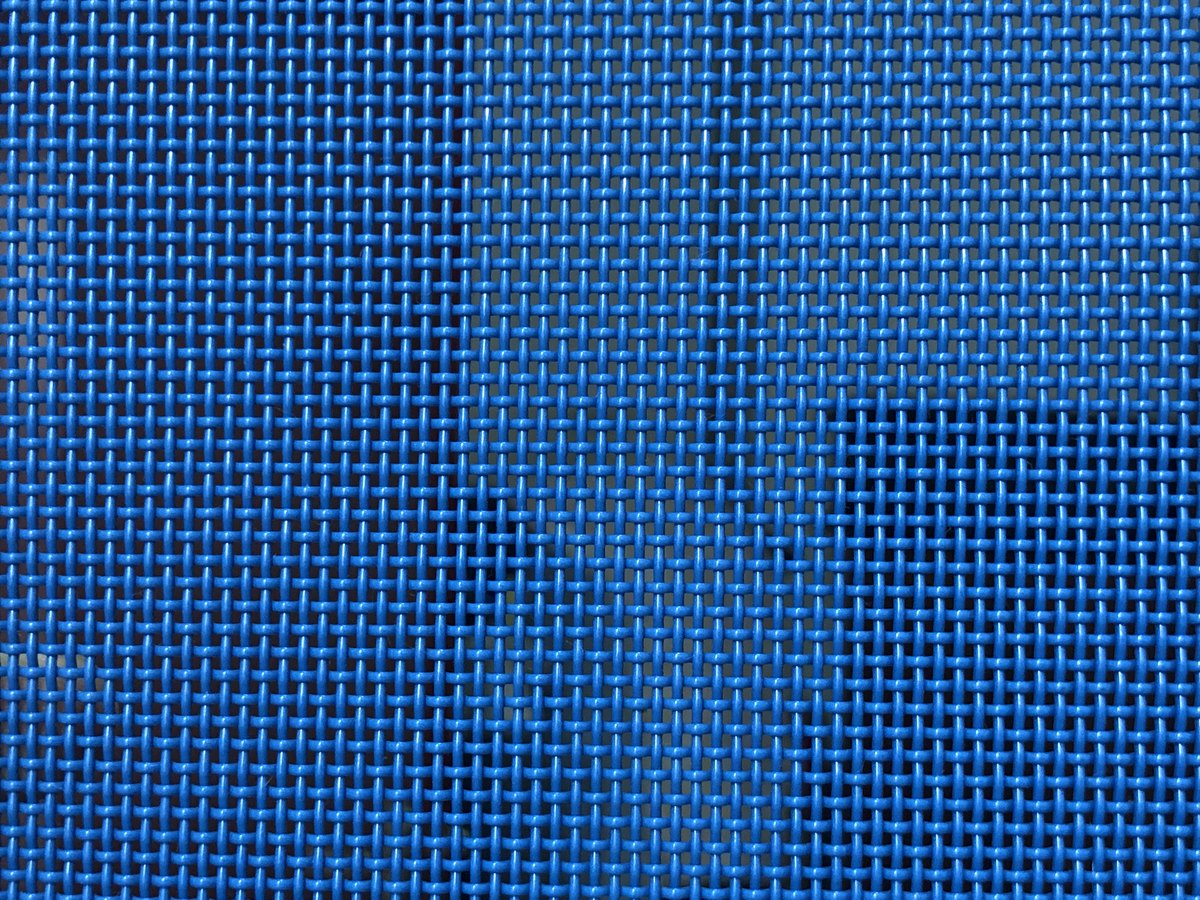
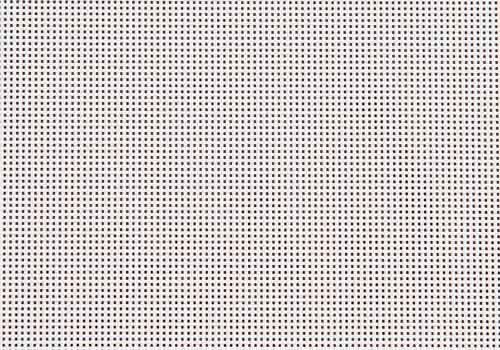
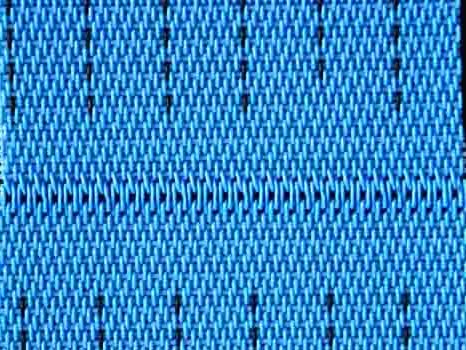
Polyester monofilament woven into precise square openings — known as square mesh or screen mesh. More than 20 heat-set apertures, from 200 µm × 200 µm up to 4 mm × 4 mm, stay flat and dimensionally stable at working temperatures to 180 °C — supplied seamless in widths up to 6 m and lengths past 100 m.
Where square mesh runs
Drying · conveying · screening
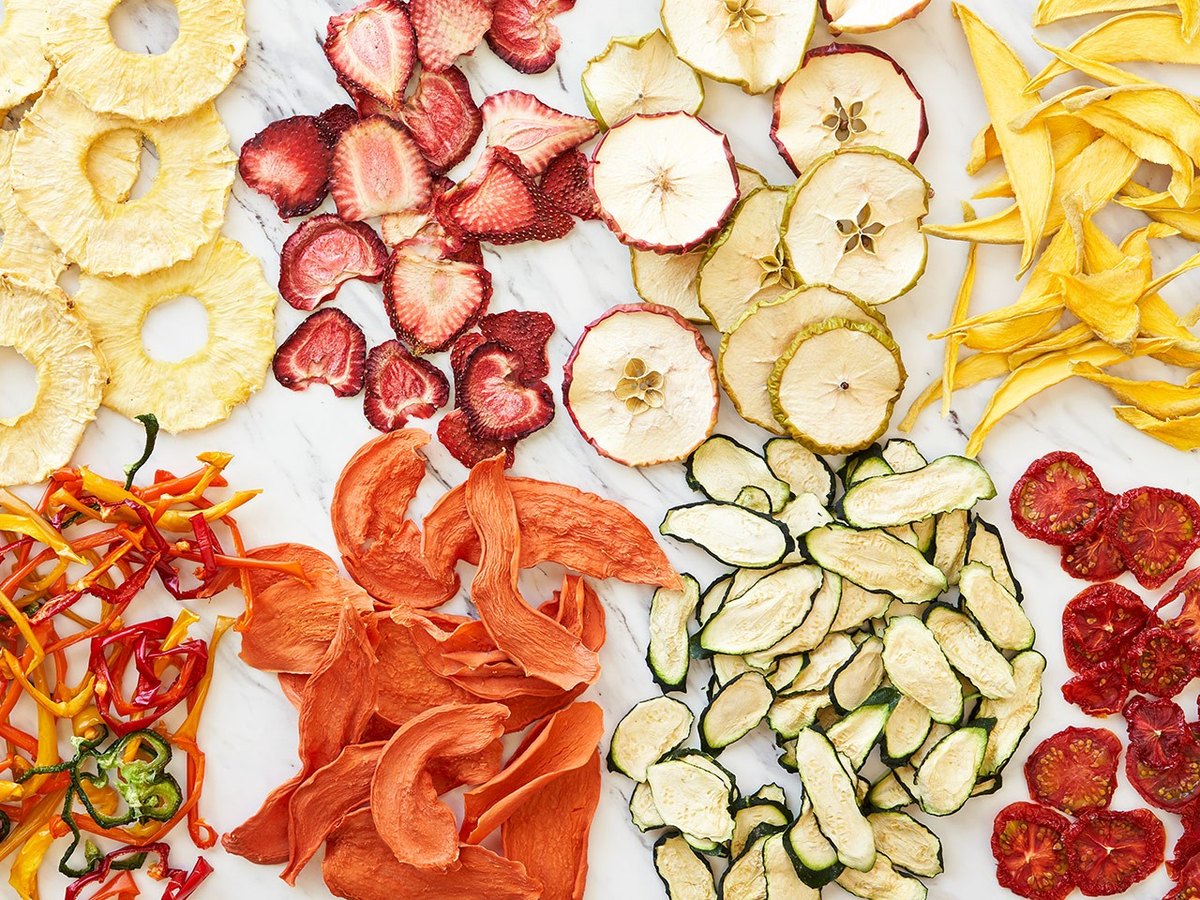
Food: vegetable draining and drying conveyors. Wood: wood chip, biomass and particle drying belts, MDF de-airing meshes. Nonwovens: forming and drying supports. Screening: polyester screen mesh for vibrating and gyratory sifters, 40–200 mesh.
Family 4 · Paper & nonwoven dryer fabrics — flat-yarn constructions
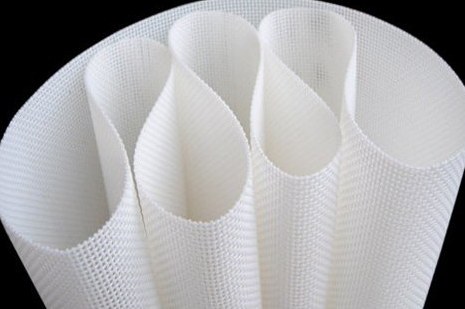
The classic dryer fabrics: more than ten flat- and round-yarn constructions woven for the dryer sections of paper machines and the forming decks of nonwoven spunlaid lines — specified by air permeability, layer count and sheet-side smoothness.
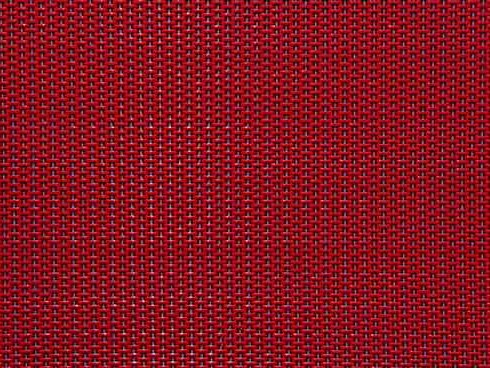
Double-layer flat yarn
After the press section
Two flat-yarn layers give a smoother, more stable sheet run through the drying section after paper forming — the construction for grades where contact marks would end up in the finished sheet.
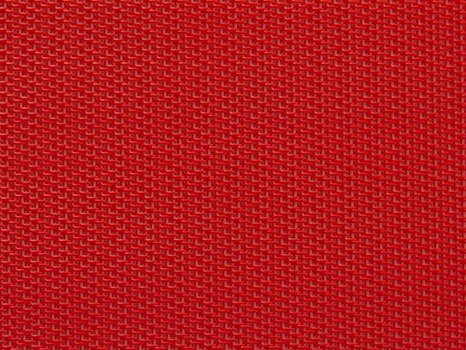
Single-layer flat yarn
Open drying decks
The open, high-airflow construction for paper drying decks — and the same fabric runs on nonwoven spunlaid (polymer-laid) forming lines, where an even, stable mesh carries the filament sheet through bonding.
Seam technology
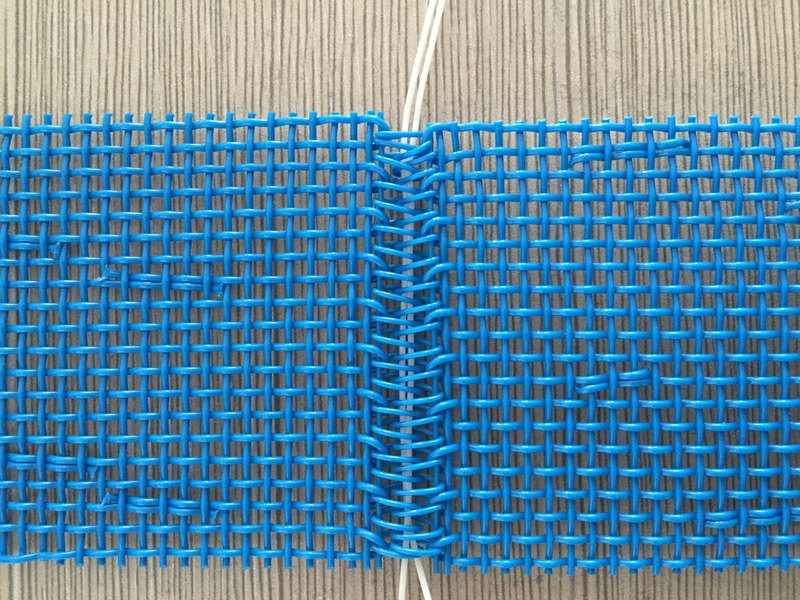
The seam is usually the first thing to fail on a dryer fabric — so it is where we put the work in. Our spiral-linked seams are reinforced ring by ring; joints for anti-static belts are made in PEEK — heat-resistant, hydrolysis-resistant and chemically inert — so the joint outlives the fabric around it.
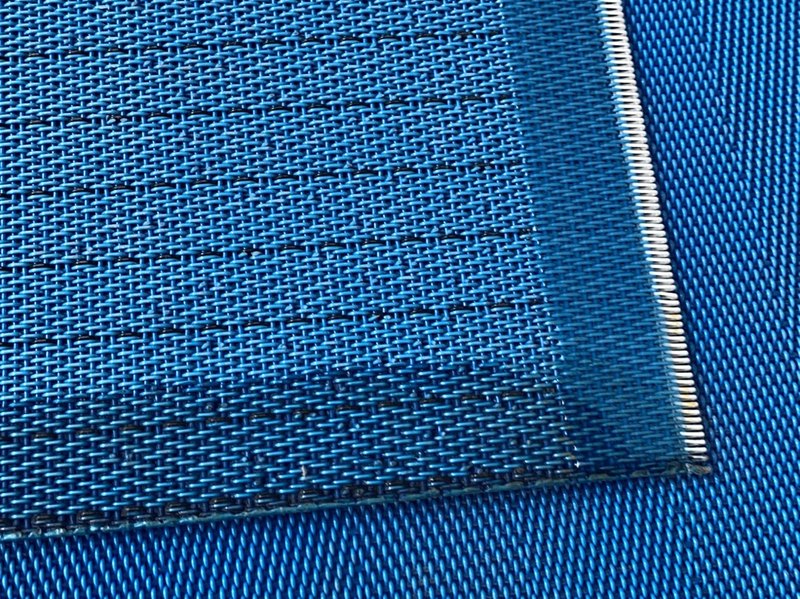
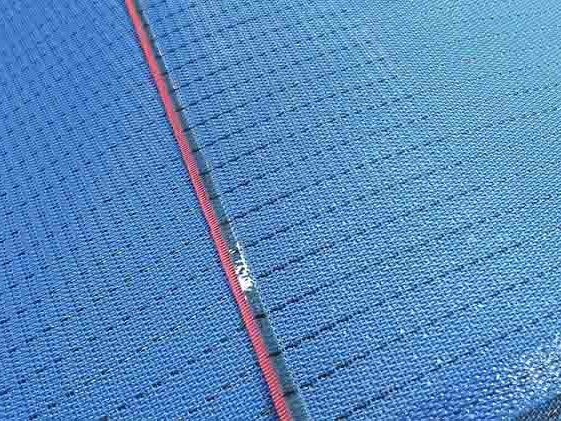
Alligator clipper joints are available on request for customers whose equipment specifies them — though on dryer fabrics we recommend spiral or endless seams first.
Specifications — factory test data
| Model | Warp yarn (mm) | Weft yarn (mm) | Warp/Weft dens. (/cm) | Weave | Air perm. (CFM) | Thickness (mm) | Weight (g/m²) |
|---|---|---|---|---|---|---|---|
| 12804TK | PET 0.8/0.65/0.45 anti-static | PET 0.8 | 12.7 / 4.5 | Anti-static | 528 | 2.19 | 1460 |
| 16804K | PET 0.68/0.64 anti-static | PET 0.8 | 16.6 / 6.9 | Anti-static | 282 | 1.84 | 1420 |
| 611 | PET 0.8 × 0.42 red | PET 0.8 white | 11 / 5.5 | 2/2 twill | 799 | 1.25 | 896 |
| 624 | PET 0.5 white | PET 0.5 white | 24 / 12 | Double layer | 781 | 2.26 | 1212 |
| 625A | PET 0.38 × 0.58 red | PET 0.5 red | 20 / 11.7 | Satin | 427 | 1.73 | 1050 |
Drying is your most energy-hungry section. A dryer fabric with the right air permeability (CFM) lets hot air reach the product instead of the fan fighting the belt — and a clean, anti-static fabric keeps that CFM stable between washes. Send us your dryer type, temperature and product; we match CFM, seam and edge per zone.
Machine & platform fit
Board forming machines (MDF / PB forming lines) · Paper machine dryer sections · Nonwoven spunlaid forming lines · Food, vegetable & biomass mesh drying conveyors
Frequently Asked Questions
Why choose an anti-static dryer fabric?
Anti-static yarns (carbon filament) drain the static charges that build up on high-speed dryers — preventing dust attraction, sheet wrap-ups and shocks to crews, especially on board forming and food drying machines.
What is air permeability (CFM) and why does it matter?
CFM (cubic feet per minute per square foot) measures how easily drying air passes through the fabric. Too open and the sheet loses contact; too tight and the fan works against the fabric. We select CFM per dryer zone, product and temperature.
What seam options are available?
Strong warp loop seams as standard — the seam is usually the first failure point on a dryer fabric — plus pin seams and endless seaming for smooth high-speed running.
Can dryer fabrics be used for food drying?
Yes. We supply food-grade anti-static dryer fabrics for food belt dryers, with food-contact compliant materials.
Do you supply fabrics for wood panel drying?
Yes — belt dryer fabrics for particleboard and OSB lines are a core application. See also our spiral dryer fabrics for open, high-CFM duties.
How do I keep dryer fabrics clean?
Periodic cleaning keeps CFM stable: clogged fabrics raise steam use. Ask us for a cleaning and conditioning schedule for your duty.
What is the silicone-coated (4106S) version for?
4106S coats a single-layer dryer fabric with high-temperature silicone — used in MDF production where the belt must release resin-laden product cleanly. See the video above.
What are the joints made of?
Spiral joints on our anti-static belts are made of PEEK — heat-resistant, hydrolysis-resistant and chemically inert — so the joint outlives the fabric. Steel clipper and endless joints are available on request.
Dryer fabric, dryer belt or dryer conveyor fabric — what is the difference?
The three names cover the same product family. “Dryer fabric” is the paper-industry term; “dryer belt” and “dryer conveyor belt” emphasise the conveying duty on board, food and wool lines. We map every enquiry to the right construction for the machine.
What opening sizes do your square mesh belts come in?
More than 20 heat-set square openings from 200 µm × 200 µm up to 4 mm × 4 mm, woven from polyester monofilament and heat-set for low shrinkage at working temperatures to 180 °C — supplied flat and stable in seamless widths up to 6 m.
Request a quote for dryer fabrics
Dryer type + temperature + target CFM = specification matched within 24 hours.
Tell us about your machine — we reply within 24 hours
Our engineers match weave, material, seam and edge to your duty. A photo of the old belt's data tag helps.