Press Filter Fabric (Filter Cloth)
Filter cloths for frame press filters, membrane presses and drum, disc or leaf filters — monofilament for clean cake release, multifilament for clear filtrate, woven and finished to your slurry.
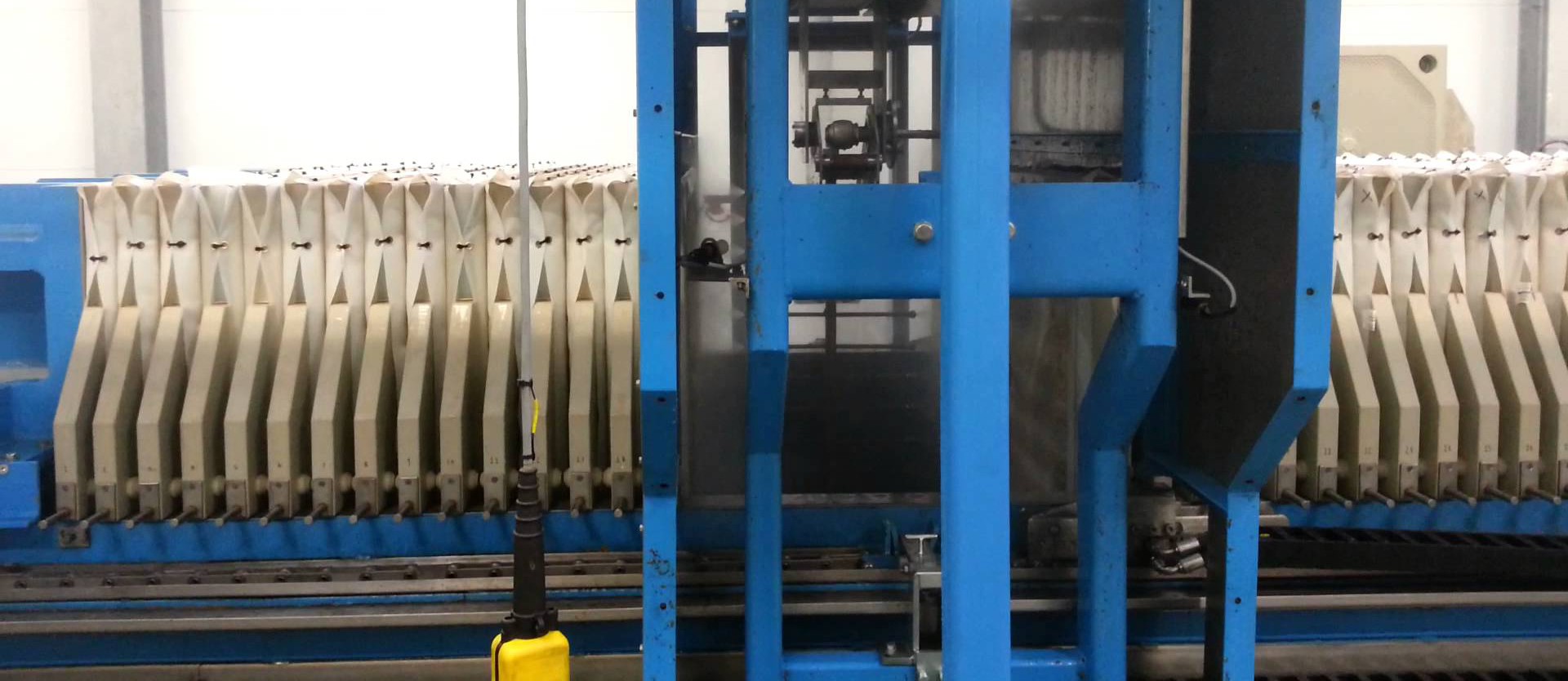
Aurora PF filter cloths cover frame press filters, membrane presses and drum, disc or leaf filters. Monofilament weaves release cakes cleanly and resist blinding; multifilament and staple weaves catch fine particles for clear filtrate. We help you match weave, yarn and micron rating to your slurry — the selection guide below is a good start.
The cloths — cotton, monofilament, anti-static
Weave, yarn type and micron rating decide how the cloth releases cake and how clear the filtrate runs. Three constructions cover the pressing spectrum:
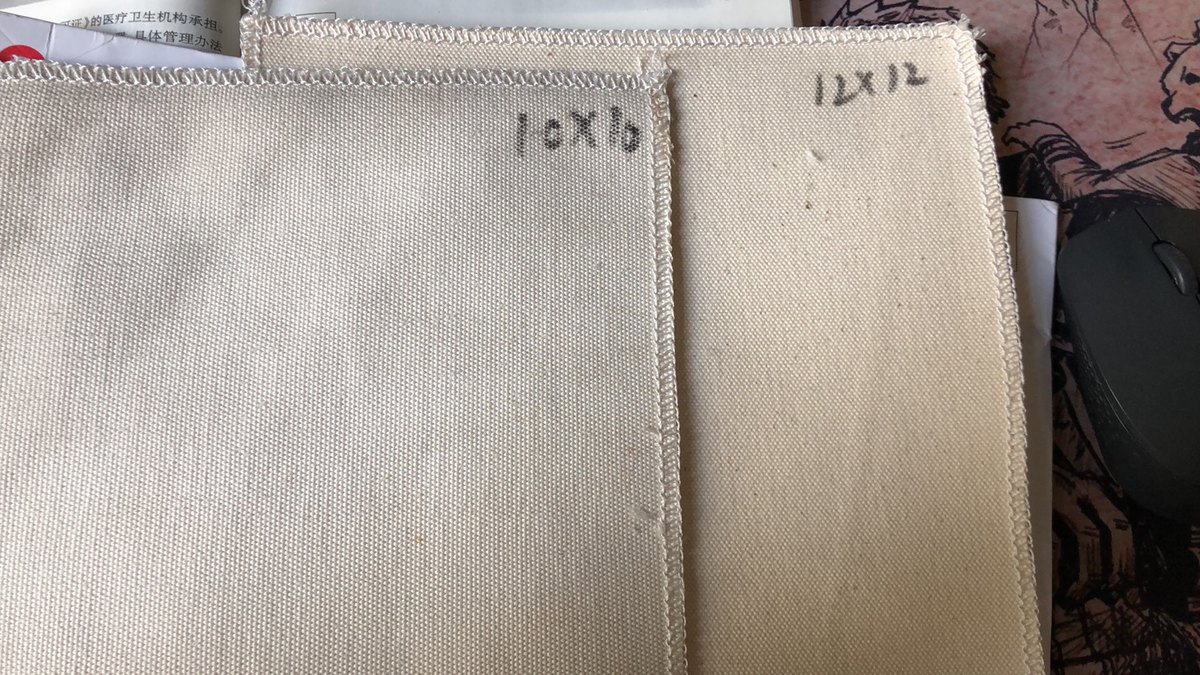

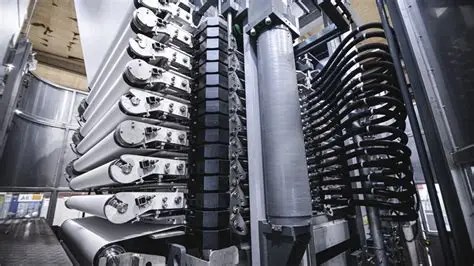
Vertical press filters — the cloth that has to walk
The vertical automatic press (Larox-type tower press) stacks horizontal chambers into a tower and runs one continuous cloth zigzagging through the whole plate pack — a walking cloth up to ~55 m long that must track true through tension and centering rollers, cycle after cycle. Membrane plates squeeze at up to 16 bar, and the cloth is washed every cycle. That is the harshest cloth duty in filtration: dimensional stability so the long cloth never creases or wanders, precise edges that still seal the chambers at full squeeze, and weave construction that releases the cake cleanly at discharge — which is exactly what our weave is built for.
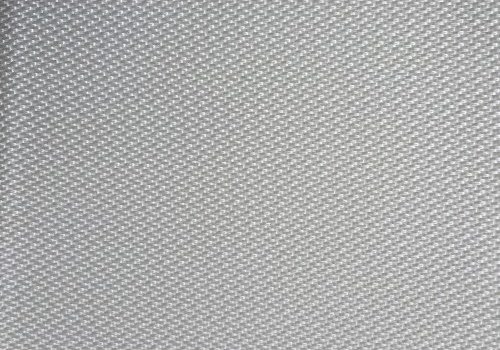
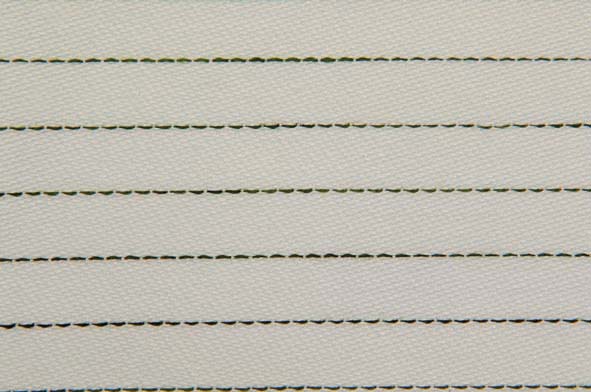
Walking-cloth weave for tower presses
Larox-type · up to 16 bar squeeze
Dimensionally stable, calendered for release, edges finished for chamber sealing — supplied as endless walking cloth to your tower-press drawing, in food-grade or mining constructions.
The filters our cloths serve
Beyond the frame and membrane presses in the banner: the same cloth platform covers vacuum drum filters, horizontal disc filters and vertical tower presses.
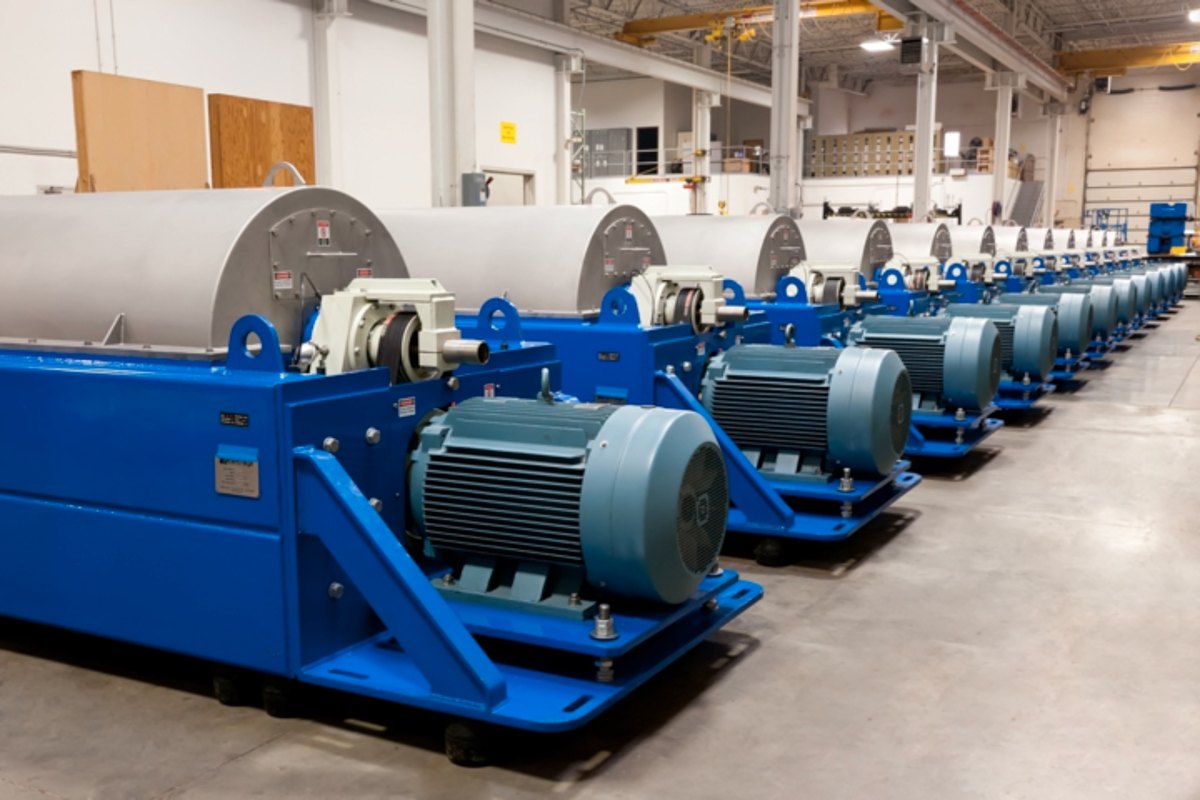
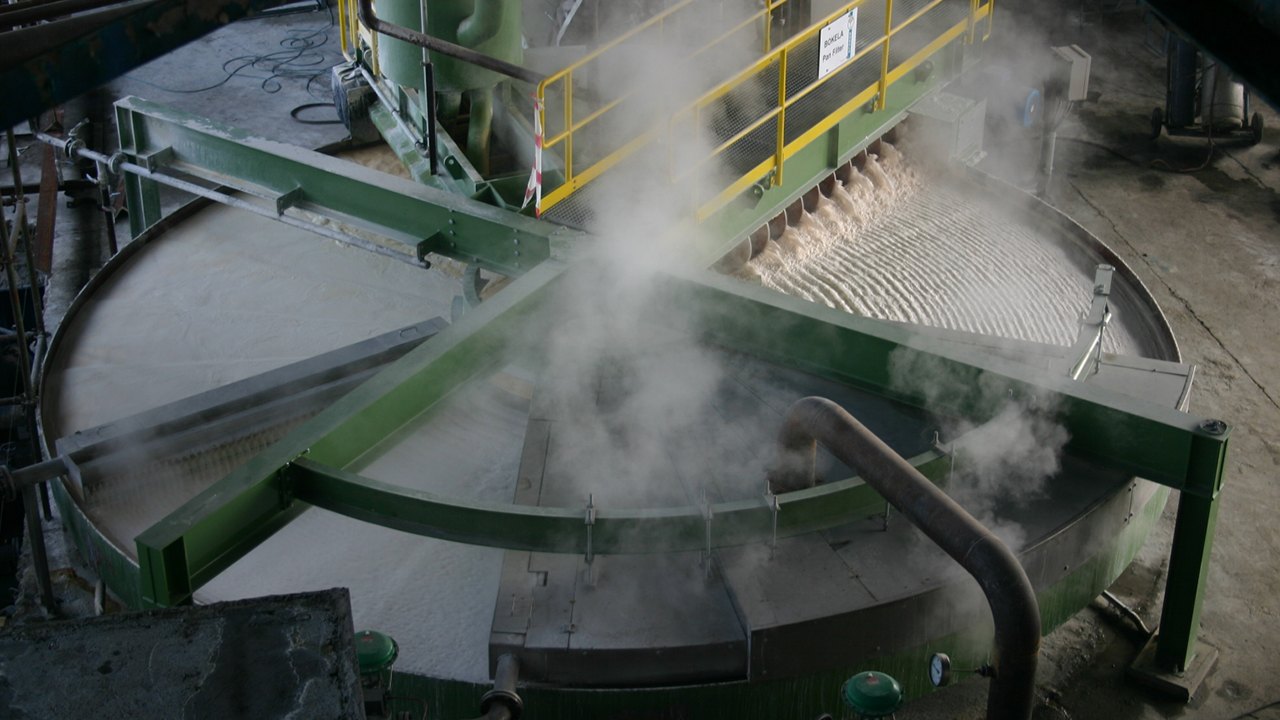
Case — 1.5 m wide cloth in service
A 1.5-metre-wide PF cloth running on a customer press — wide-width weaving keeps the chamber count per cloth joint low, so fewer seams sit inside the filtering area.
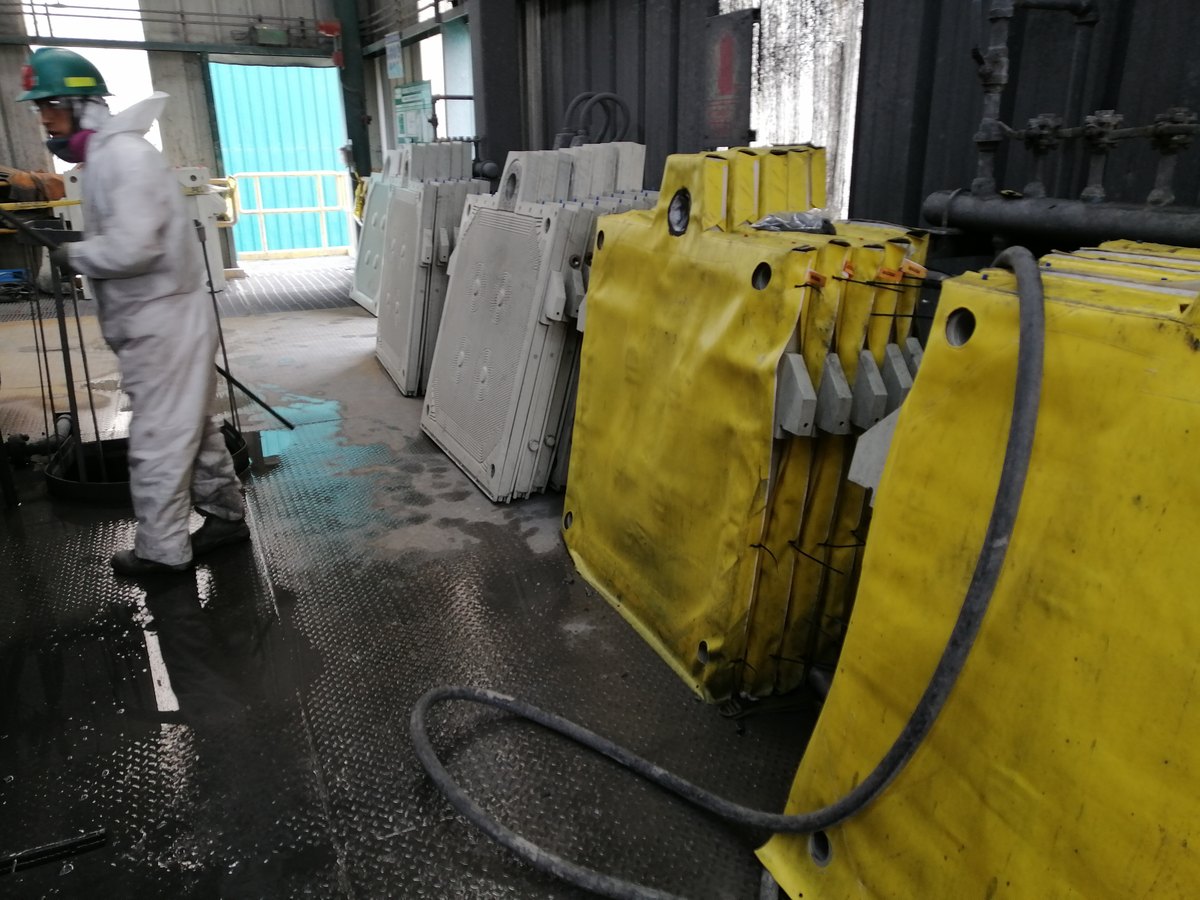
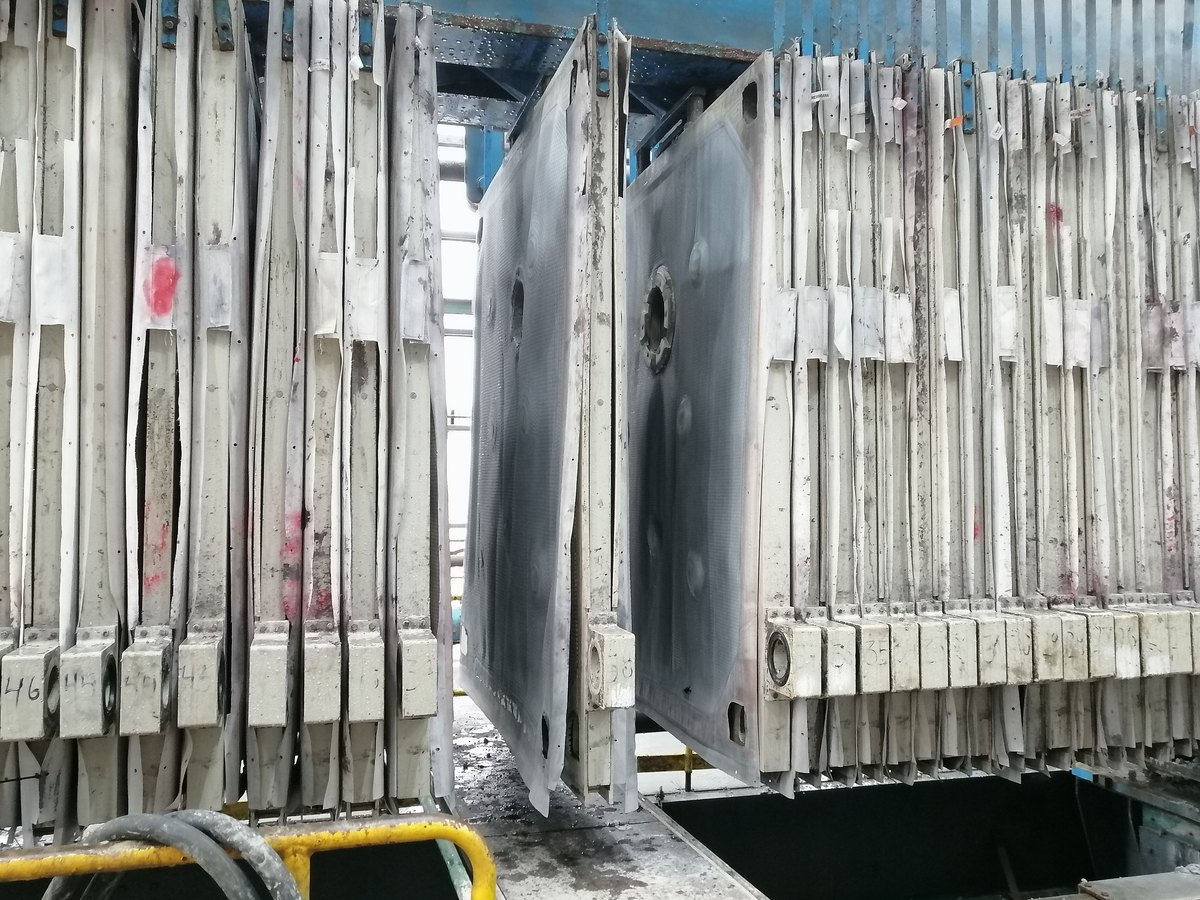
Wide-width weaving, fewer in-area seams
Customer site
Woven wide so the cloth covers the full plate pack with minimal joints — more filtering area, fewer potential leak paths, faster fitting.
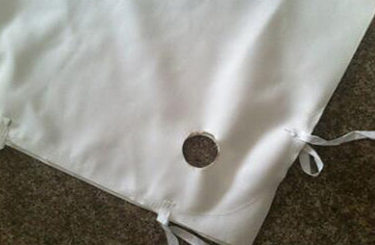
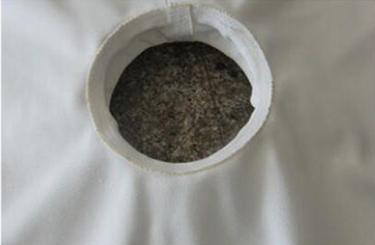
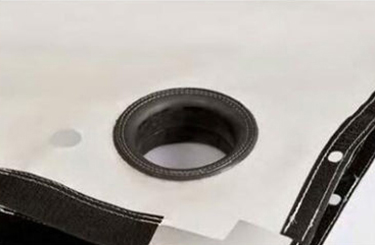
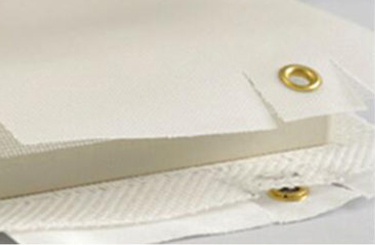
Plate-side fittings — eyelets & seals
Every cloth is finished to fit its press: corner ties, center feed holes, rubber grommets and brass eyelets — positioned to your plate drawing.
Specifications — factory test data
| Model | Yarn family | Air perm. (CFM) | Thickness (mm) | Weight (g/m²) | Tensile (N/cm) |
|---|---|---|---|---|---|
| Z223-PP | Monofilament PP | 30 | 0.74 | 431 | 775 |
| Z3232-PP | Monofilament PP (open) | 346 | 0.80 | 380 | 829 |
| Z1616-PP | Monofilament PP (dense) | 6 | 0.44 | 289 | 908 |
| Z53-PP | Monofilament PP (fine) | 25 | 0.39 | 288 | 592 |
| Z1820-PA | Monofilament PA | 68 | 0.87 | 500 | 980 |
| Z2230-PET | Monofilament PET (open) | 370 | 0.60 | 383 | 780 |
| Z600-PP | Multifilament PP | 42 | 0.65 | 328 | 850 |
| Z21213-PP | Multifilament PP (dense) | 3 | 0.94 | 613 | 1200 |
| Z1584-PP | Mono + multifilament PP | 15 | 0.70 | 405 | 746 |
| Z40150-99 | Mono + multifilament (heavy) | 2 | 1.38 | 819 | 2000 |
Cloth selection is a running-cost decision: a cloth that blinds halves its life and doubles your press cycles. Monofilament for release, multifilament for clarity, combinations when you need both — pick by total cost per tonne of dry cake, not price per m².
Machine & platform fit
Chamber (frame) plate presses · Membrane plate presses · Drum, disc and leaf filters · Candle & pressure leaf filters
Frequently Asked Questions
How do I choose a filter press cloth?
Start from your filter type, particle size and chemistry: monofilament weaves release cakes easily and resist blinding; multifilament and staple weaves give finer retention; combination weaves balance both. We recommend per slurry.
What is the difference between monofilament and multifilament cloth?
Monofilament cloth is woven from single smooth yarns — best cake release and blinding resistance. Multifilament cloth uses twisted yarn bundles — finer filtration and clearer filtrate, at the cost of harder cake release.
Do you supply cloths for membrane filter presses?
Yes — including centrate drainage designs and seal edges for membrane plates.
Can the cloths be made seamless?
Barrel-neck and seamless cloths are available for full-plate designs on request.
What micron ratings are available?
From around 1 µm (needled) to 200 µm (open monofilament) — we quote a rating per weave after seeing your particle distribution.
Which material for lithium phosphate duty?
PP and PET cloths are typical; PVDF where temperature and chemistry demand. Send us pH and temperature for a recommendation.
Request a quote for press filter cloths
Press model + slurry + cloth drawing = quotation within 24 hours.
Tell us about your machine — we reply within 24 hours
Our engineers match weave, material, seam and edge to your duty. A photo of the old belt's data tag helps.