Spiral Fabric (Spiral Belt)
Endless belts of monofilament spirals joined by hinge pins — one weaving platform, two families: open spiral dryer fabrics with no filler yarns (SP-D), and filled spiral press filter belts (SP-P) where 2–5 filler yarns tune the permeability down for filtration.
Aurora SP spiral fabrics are endless belts built from polyester (PET) or PPS monofilament spirals joined by hinge pins — an open, non-tracking structure with high drainage and easy cleaning, equally at home as dryer belts and as filter belts. Two families cover the two duties: without filler yarns for maximum air flow (up to ~1000 CFM) — the open SP-D models 6890 / 9010 for drying and conveying; or with 2–5 filler yarns for higher density and lower permeability (down to ~325 CFM) — the spiral press filter belt (SP-P, below) for belt press filtration. See them alongside the whole dryer fabric range.
SP-D · Spiral dryer fabrics — hollow, no filler yarns
Without filler yarns the spiral structure stays fully open — our 6890 and 9010 weaves measure 875–1016 CFM, so drying air passes through belt and product instead of fighting the belt. That is exactly what multi-layer board dryers, paper and food belt dryers and washing/cooling conveyors want, and the open structure resists blinding and cleans easily. Anti-static monofilament versions serve static-prone board forming dryers; PPS versions run around 240 °C long-term.
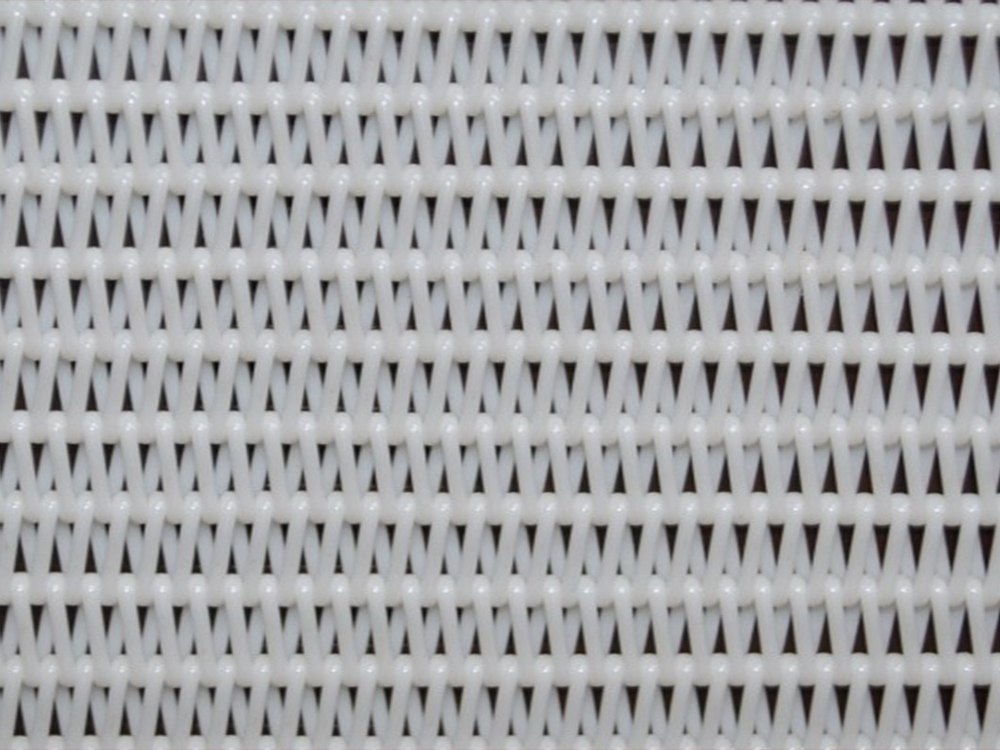
Open spiral dryer fabrics
Board dryers · Paper & food belts · Conveying
Models 6890 and 9010 cover the two platform weaves; PET as standard, PPS woven to order for heat. Non-stick PET+PTFE grades are available where product release matters.
| Model | Spiral/cross yarn (mm) | Filler yarns | Air perm. (CFM) | Thickness (mm) | Weight (g/m²) | Tensile (N/cm) |
|---|---|---|---|---|---|---|
| 6890 | PET 0.68 / 0.90 | None — open | 959–1016 | 2.4 | 1301 | 890 |
| 9010 | PET 0.90 / 1.05 | None — open | 875–991 | 3.12 | 1627 | 1300 |
SP-P · Spiral press filter belts — filled for filtration
Add 2–5 filler yarns inside the spiral loops and the open dryer structure becomes a true filter belt — the spiral dewatering belt, as belt-press operators call it: density rises, air permeability drops from ~1000 to as low as 325 CFM, and fines stay in the product instead of washing through. Round fillers maximize open area for heavy drainage; flat fillers give a smoother surface and better fines retention for juice and palm-oil squeezing.
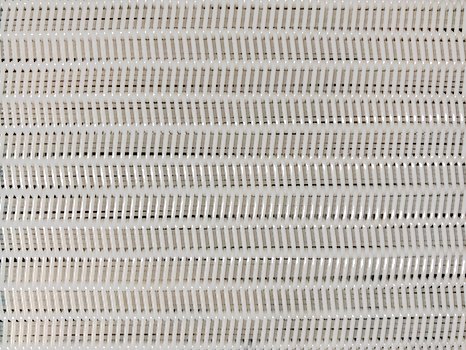
Filled spiral press filter belts
Belt press filters · Sludge · Juice & palm oil
Sludge dewatering, sand washing, juice squeezing and palm oil pressing — the filler count and cross-section set the permeability and surface balance. We match both to your duty from the measured table below.
| Model | Spiral/cross yarn (mm) | Filler yarns (weft) | Air perm. (CFM) | Thickness (mm) | Weight (g/m²) | Tensile (N/cm) |
|---|---|---|---|---|---|---|
| 6890T2 | PET 0.68 / 0.90 | ×0.8 × 2 round | 741–783 | 2.4 | 1521 | 890 |
| 6890T3 | PET 0.68 / 0.90 | ×0.7 × 3 round | 633–666 | 2.4 | 1632 | 890 |
| 9010T3 | PET 0.90 / 1.05 | ×0.9 × 3 round | 675–716 | 3.12 | 2017 | 1300 |
| 9010T4 | PET 0.90 / 1.05 | ×0.9 × 4 round | 413–441 | 3.12 | 2147 | 1300 |
| 9010T5 | PET 0.90 / 1.05 | ×0.8 × 5 round | 325–358 | 3.12 | 2277 | 1300 |
| 9010TF1 | PET 0.90 / 1.05 | 0.65 × 2.0 flat | 741–783 | 3.12 | 1905 | 1300 |
Special materials series — beyond standard PET
Three specialty material lines run on the same spiral platform — chosen by environment, not by duty:
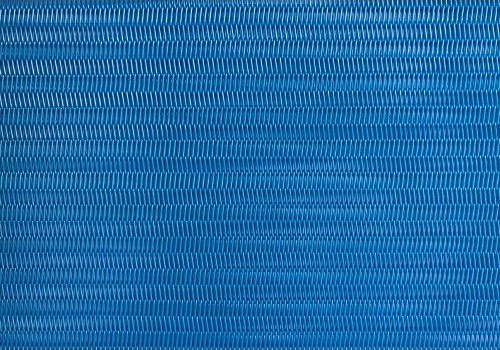
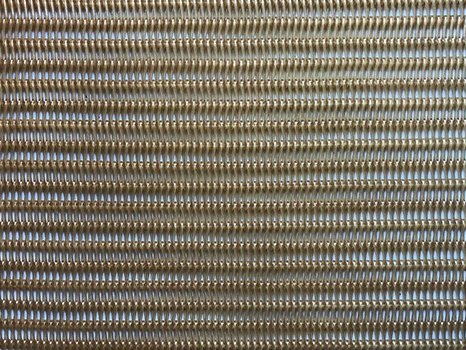
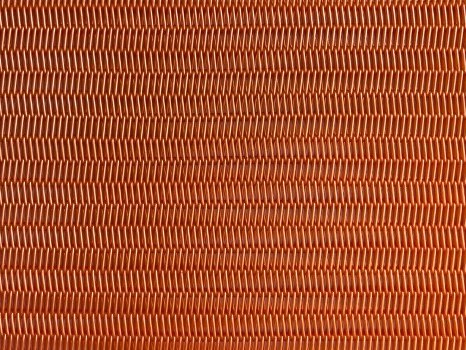
One weaving platform, two duties. Open spirals move air (drying); filled spirals hold fines (filtration) — and the filler count tunes permeability anywhere between. Send us your CFM target and duty; we match model and material within 24 hours.
Machine & platform fit
Belt press filters · Belt & tunnel dryers · Washing, cooling & conveying lines
Frequently Asked Questions
What is the difference between a spiral fabric and a woven dryer fabric?
A spiral fabric is assembled from monofilament spirals joined by hinge pins, giving an open, non-tracking structure with high drainage. A woven dryer fabric is woven from warp and weft yarns and provides a smoother surface. Spiral fabrics are easier to repair on the machine; woven fabrics usually offer higher stability at high speeds. Full comparison in our spiral fabric guide.
With or without filler yarns — how do I choose?
Without fillers you get maximum open area and air flow (drying and conveying). Adding 1–5 filler yarns increases density and lowers permeability — right for filtration duties on belt press filters.
Can spiral fabric be used on belt press filters?
Yes — with filler yarns, spiral fabrics work as filter belts for sludge dewatering, sand washing, juice squeezing and palm oil squeezing. Their open structure drains quickly and releases the filter cake easily.
Do you offer PPS spiral fabrics for higher temperatures?
Yes — PPS monofilament spiral fabrics serve higher-temperature drying applications (long-term duty around 240 °C, verified on request). Tell us your working temperature and we will recommend the right material.
Is it called spiral belt or spiral fabric?
Both are used. Spiral fabric matches our structure best and matches Google image results; spiral belt is a common alias (often for food conveyor spirals). We cover both spellings across this family of pages.
Why no filler yarns on a dryer fabric?
Dryers need air: without filler yarns the spiral structure stays fully open — our 6890 and 9010 weaves measure 875–1016 CFM — so drying air passes through belt and product instead of being blocked.
Do you offer anti-static spiral dryer fabrics?
Yes — anti-static monofilament versions for static-prone board forming dryers.
Round or flat filler yarns — which should I choose?
Round monofilament fillers maximize open area and CFM, keeping channels clear longer — good for heavy drainage. Flat fillers give a smoother contact surface and better fines retention while keeping good permeability.
How many filler yarns do I need?
2–3 fillers for coarse, free-draining duties (sand washing); 3–4 for typical municipal sludge; 5 (or flat fillers) for fine solids and juice/oil squeezing. Measured CFM per model is in our spec table — we match the count to your target.
Request a quote for spiral fabrics
Duty + CFM target + width = model matched within 24 hours.
Tell us about your machine — we reply within 24 hours
Our engineers match weave, material, seam and edge to your duty. A photo of the old belt's data tag helps.