Vacuum Filter Fabric (Vacuum Filter Belt)
Horizontal vacuum belt filter fabrics engineered model by model — from FGD gypsum dewatering to phosphoric acid and mining concentrates, each weave tuned for permeability, release and scraper life.
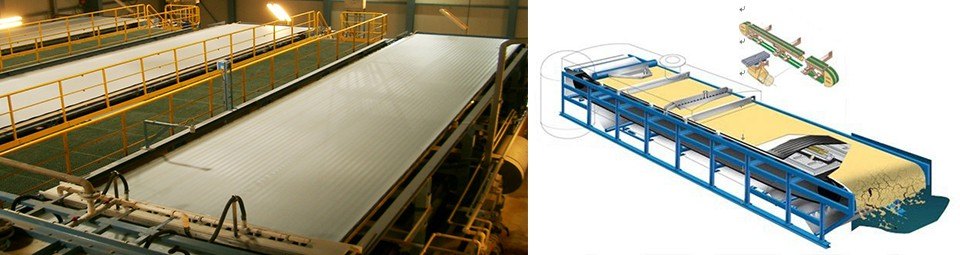
Everything on a horizontal vacuum belt filter is decided by the fabric: the vacuum the pump can pull, how clean the filtrate runs, how the cake releases, and how long the cloth survives the scraper. Aurora VF fabrics are woven in five model families — each answering a different duty, all factory-tested.
Choose by duty — the five model families
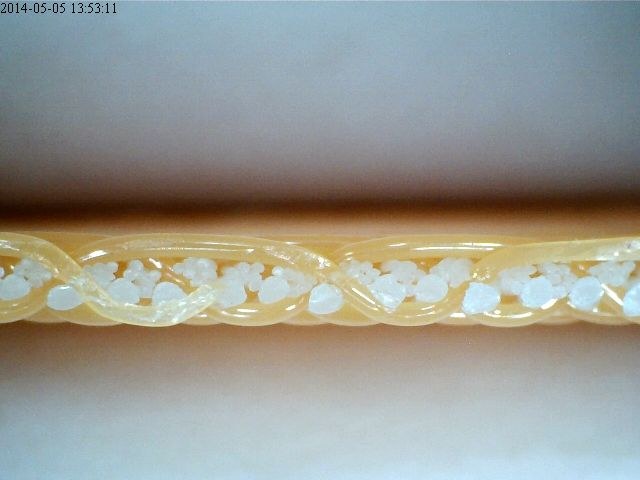
623A Mining & precision
The same structure as 623, re-engineered with an all-monofilament weft — several fine monofilaments plied into one yarn — for higher fabric strength and a step up in filtration precision. The choice for demanding mining dewatering duties.
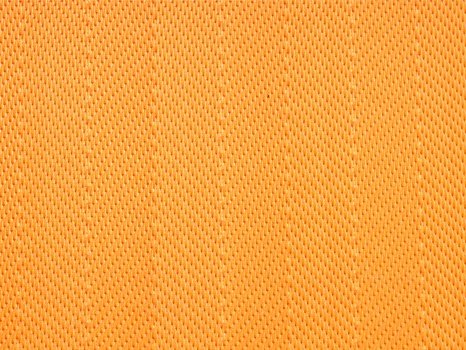
623 FGD gypsum — upgraded
Surface is 100% monofilament with the multifilament buried on the machine side: the gypsum cake releases cleanly, the surface resists the scraper, and service life runs well above 617. The more complex structure makes it thicker — a few close-clearance belt filters suit 617 better.
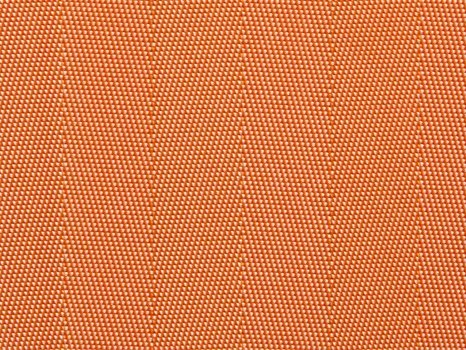
617 FGD gypsum — low permeability
A multifilament weft takes air permeability down to a fine band — right for FGD gypsum dewatering after flue-gas desulfurization, and for coal-ash (fly ash) slurries that need a tight cloth. The economical FGD workhorse.
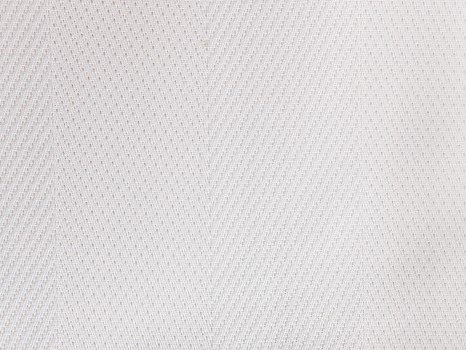
620 Chemicals — most versatile
A double-layer structure with a fine monofilament sheet side and a drain layer beneath (mono or multifilament variants). Surface calendering tunes the permeability down to very fine bands, while the mono top keeps cake release excellent — the most widely used family across chemical processes, with the most derived variants.
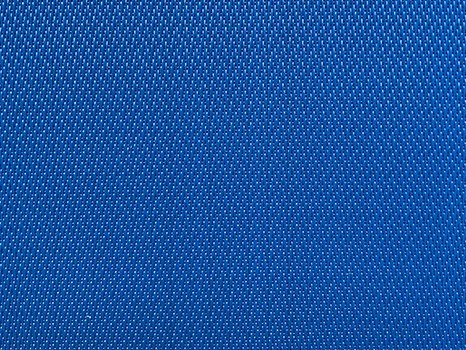
610 Phosphoric acid
A satin-weave monofilament fabric in blue PET, a long-standing choice for phosphoric acid and general chemical duties on horizontal belt filters.
FGD gypsum: 617 or 623?
Start with 617 when…
- Budget leads, or the filter has tight clearances (617 is thinner)
- Standard gypsum dewatering with moderate scraper contact
- Also suits fly-ash slurries at low permeability
Upgrade to 623 when…
- Cake release and scraper wear drive your cloth costs
- You want longer campaigns between changes (623 outlasts 617)
- Filtrate clarity must hold at higher loads
On a vacuum filter, cloth choice is throughput. A blinded or wrongly specified fabric throttles the vacuum and the whole filter slows down. Picking between 617 and 623 by total cost per tonne of dry gypsum — not price per m² — typically pays back in longer campaigns and drier cakes. Send us your cycle data and we will do the comparison on your numbers.
Joints — steel clipper and flap seams
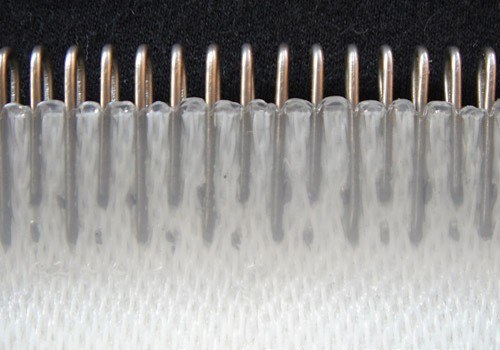
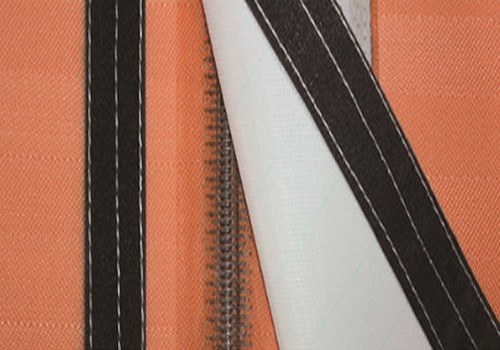
Seamed cloths are joined to suit the filter: the steel clipper joint is the standard on press and vacuum cloths, while the flap-covered clipper — a cloth flap over the lacing — protects the joint where it runs against the wear surface, common on vacuum drying belts. Both are fitted in-house to your filter drawing; endless cloths on request.
Machine & platform fit
Horizontal vacuum belt filters (Andritz, FLSmidth, Delkor, Pannevis, WesTech type) · Vacuum disc filters · Rotary drum filters
Specifications — factory test data
| Model | Yarn | Warp/Weft dens. (/cm) | Weave | Air perm. (CFM) | Thickness (mm) | Weight (g/m²) | Tensile (N/cm) |
|---|---|---|---|---|---|---|---|
| 610D | PET 0.33 / 0.5 blue | 40 / 11.5 | 5/1 satin | 205–218 | 1.16 | 870 | 1604 |
| 620 | PET 0.2+0.35 / 0.23+0.32 | 52+13 / 27 | 3/1 + 2/2 | 306–640 | 1.43 | 796 | 1231 |
| 620A | PET 0.2+0.35 / 0.4+600D | 52+13 / 27 | 3/1 + 2/2 | 50–54 | 1.27 | 776 | 1099 |
| 623A | PET 0.48 orange / 0.5 white | 27.5 / 18.5 | 6/2 satin | 100–150 | 1.83 | 1448 | 1543 |
| 3356 | PET 0.35 / 0.5 blue | 27 / 12 | 5/1 satin | 292 | 1.1 | 816 | 1159 |
| 008MD | PP — 8 µm rating | 192 / 54 | Double layer | 13–20 | 0.85 | 560 | 5500 |
| 030MD | PP — 30 µm rating | 192 / 54 | Double layer | 38–43 | 0.9 | 560 | 5500 |
| 120D | PP — 120 µm rating | 140 / 57 | Plain | 333–366 | 1.18 | 510 | 5000 |
PP MD-series belts (8–120 µm ratings, 3500 mm width) cover fine-rating duties — ask for the full sheet.
Frequently Asked Questions
617 or 623 for FGD gypsum — which should I choose?
617 is the economical FGD workhorse: a multifilament weft gives low permeability (33–41 CFM) for gypsum and fly-ash slurries. 623 upgrades it — 100% monofilament surface with the multifilament hidden on the back — for better cake release, better scraper-wear resistance and longer life; the trade-off is a thicker fabric that a few close-clearance filters won't take. We help you compare on total cost per tonne.
Do you supply fabrics for vacuum disc filters?
Yes — we cut and seam vacuum filter fabrics to fit disc filter sectors, and drum filter panels, in custom sizes for every model.
Can vacuum filter belts be made endless?
Yes. Horizontal vacuum belt filter fabrics can be supplied endless or with pin/spiral seams, with sealed or reinforced edges.
How do I match cloth to my cake?
Fine cakes need tighter weaves for clear filtrate; coarse, free-draining cakes reward open monofilament weaves for capacity. We select weave and CFM from your particle size and loading.
Do you supply to common OEM filter brands?
Yes — our fabrics are dimensioned to fit the common horizontal belt, disc and drum filter platforms; tell us the machine model and we cut to it.
Request a quote for vacuum filter fabrics
Filter model + slurry + target permeability = model recommendation within 24 hours.
Tell us about your machine — we reply within 24 hours
Our engineers match weave, material, seam and edge to your duty. A photo of the old belt's data tag helps.